
Loading…
17 June 2026
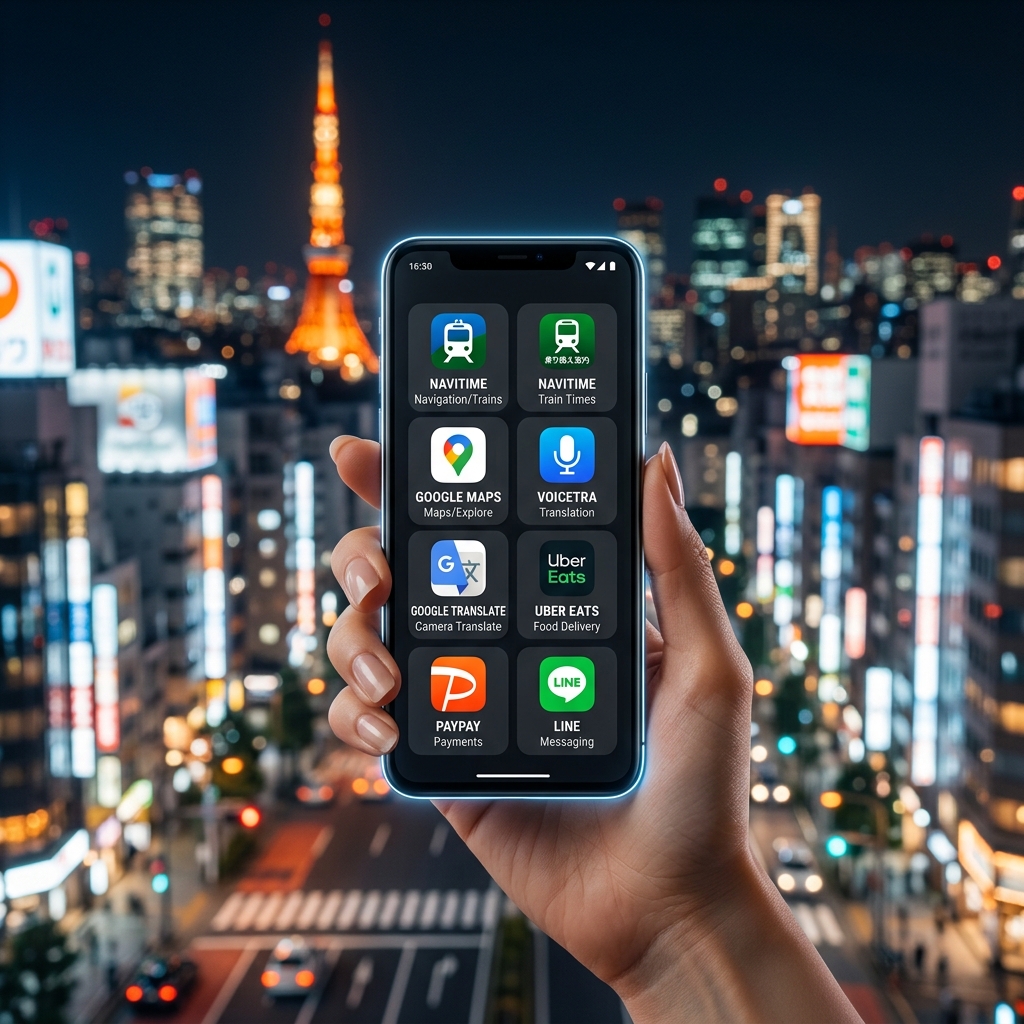
Living in Japan is an exciting adventure, but it also comes with unique day-to-day challenges—from navigating complex train transfers to translating grocery labels and making digital payments. Fortunately, having the right applications installed on your smartphone can make your transition infinitely smoother. Whether you are living in Tokyo, Kyoto, or Fukuoka, these must-have mobile apps will help you live like a local from day one.
Here is an overview of the essential app categories and the top recommendations for each:
| Category | Recommended App | Key Benefit | Cost |
|---|---|---|---|
| Public Transit | Yahoo! Transit (Norikae Annai) or Google Maps | Detailed train platform numbers and transfer schedules | Free |
| Communication | LINE | The default messaging app used by everyone in Japan | Free |
| Translation | Google Translate & DeepL | Real-time camera translation for reading kanji labels | Free |
| Digital Payments | Mobile Suica or PayPay | Tap-to-pay transit and convenience store payments | Free |
| Taxi Booking | GO App | Easy hailing and card payment without language barriers | Free (ride fees apply) |
Japan's train networks are incredibly punctual but massive and complicated. While Google Maps is excellent for walking directions and general routing, Yahoo! Norikae Annai (Transit) is the preferred app for locals. It tells you exactly which car of the train to board for the fastest transfer, which station exit is closest to your destination, and alerts you to any service delays.
Pro Tip: Download the mobile version of Suica or PASMO to your phone's digital wallet (Apple Wallet or Google Pay). You can top up your card using a registered credit card and pay for train fares and convenience store purchases with a simple tap of your phone.
In Japan, WhatsApp, Messenger, and standard SMS are rarely used. LINE is the undisputed king of communication. Everyone from university professors and employers to friends and landlords will expect you to have a LINE account. It is also used by businesses and ward offices to send local announcements and discount coupons.
Even if you are studying Japanese, reading mail, utility bills, or food packaging can be difficult. Google Translate features an instant camera translation tool that lets you hover your phone over text to see a live translation. For translating long documents, emails, or messages, DeepL offers much more natural and contextually accurate translations.
For official information on digital residency services and mobile IDs in Japan, you can consult the official Digital Agency of Japan.
While navigation apps are great for transit, finding localized resources can be tough. Use the interactive yuzu.help Neighborhood Map in your browser alongside your apps to locate local ward offices, immigration bureaus, foreign-friendly clinics, cheap supermarkets, and student housing options easily.
Q: Can I set up Yahoo! Norikae Annai in English?
No, the Yahoo! Transit app is only available in Japanese. However, you can use the English version of Google Maps or the Japan Travel by NAVITIME app for English transit routes.
Q: How do I load money onto Mobile Suica without a Japanese credit card?
You can add money using Apple Wallet with a foreign Mastercard or American Express, or top up with cash at ticketing machines inside train stations or convenience store ATMs.
Q: Do I need a Japanese phone number to register for LINE?
Yes. LINE registration requires SMS verification, which means you need a valid active phone number (usually a Japanese SIM card) to complete the setup.
Q: What is PayPay and is it widely accepted in Japan?
PayPay is the most popular QR code payment app in Japan. It is accepted almost everywhere, from major chains to tiny local vegetable shops and restaurants.
Q: Is Uber available in Japan for hailing rides?
Yes, but Uber mainly connects you with licensed taxi companies in Japan rather than private drivers. The local "GO" app is generally faster and cheaper for hailing taxis.
Q: Are there apps for monitoring earthquakes and disasters in English?
Yes. The "Safety Tips" app (by the Japan Tourism Agency) and "NERV Disaster Prevention" app provide fast, reliable earthquake and typhoon warnings in English.
Q: How can I order food delivery in Japan?
Uber Eats and Demae-can are the two largest food delivery apps in Japan. Both accept foreign credit cards and allow contactless delivery.
Q: What app should I use to learn Japanese vocabulary?
Anki (for flashcards) and Wanikani (for kanji) are highly recommended by language learners for daily practice and retention.