
Loading…
17 June 2026
When moving to or traveling around Japan, staying online is essential. From navigating Tokyo's complex subway system using mapping tools to translating menus and checking local transport schedules, having a reliable internet connection is a priority from the moment you land. For foreigners, the two main choices for mobile internet are SIM cards (or eSIMs) and Pocket Wi-Fi routers.
This guide compares the best connectivity options in Japan, outlining their pros, cons, costs, and coverage to help you choose the right service for your needs.
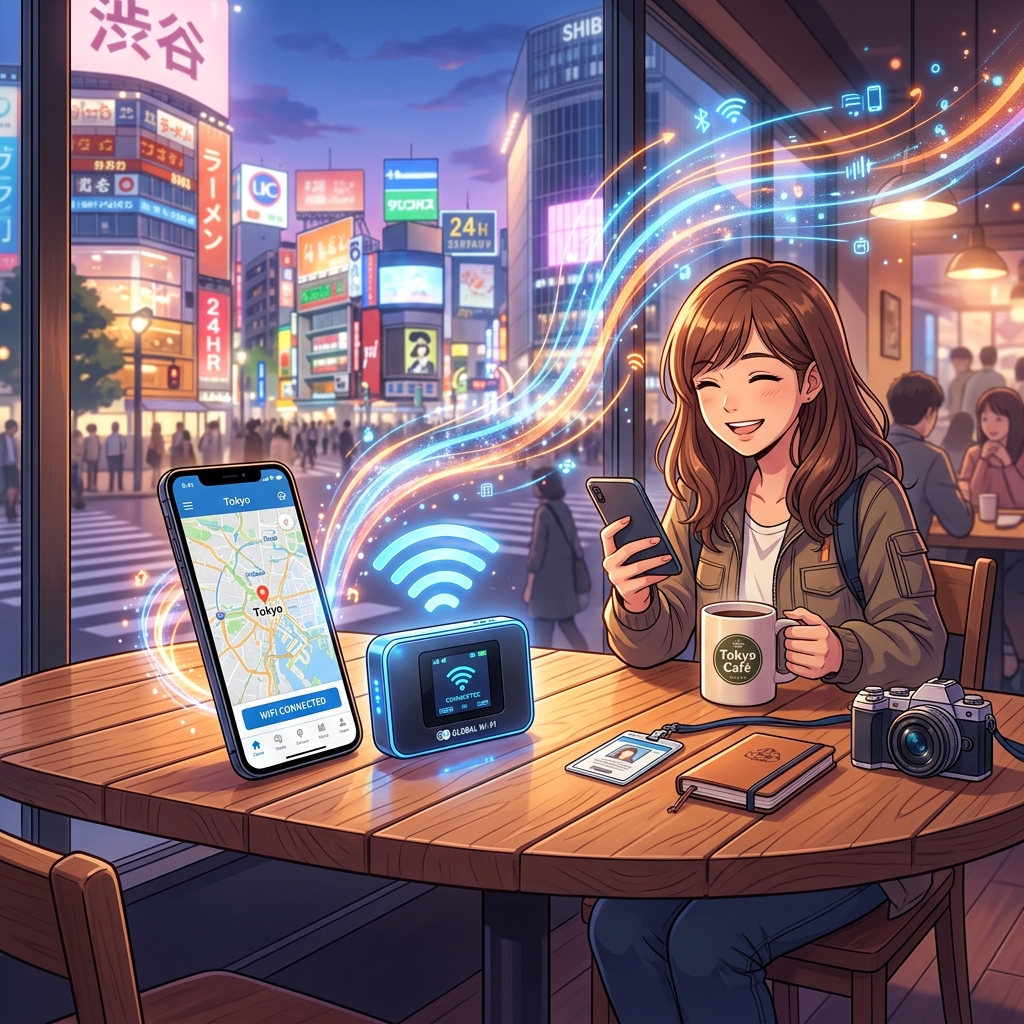
Here is a quick breakdown of how these three primary connectivity solutions compare:
| Feature | Physical SIM Card | eSIM | Pocket Wi-Fi |
|---|---|---|---|
| Ideal For | Solo travelers, budget-conscious users | Tech-savvy travelers, instant activation | Groups, remote workers, multiple devices |
| Setup | Manual installation (requires SIM pin) | Digital download via QR code | Power on and connect via Wi-Fi |
| Device Compatibility | Carrier-unlocked phones with physical slots | Carrier-unlocked eSIM-compatible phones | Any Wi-Fi enabled device (laptop, tablet, etc.) |
| Network Speed | High-speed 4G/5G (NTT Docomo/SoftBank) | High-speed 4G/5G (NTT Docomo/SoftBank) | High-speed 4G/5G (often has higher caps) |
| Local Phone Number | Data-only, or Voice/Data (requires residency verification) | Typically Data-only for short-term plans | No (data routing only) |
| Return Requirement | None (throw away after use) | None (deactivate digitally) | Yes (must return via prepaid envelope or counter) |
Pro Tip: If you are planning a long-term move to Japan, you will eventually want a local Japanese phone number. Most short-term travel SIMs are data-only. For details on how to get a long-term contract with a phone number, see our specialized SIM Cards for Foreigners in Japan Guide.
A Pocket Wi-Fi is a small, portable router that broadcast a secure Wi-Fi signal. It allows you to connect multiple devices simultaneously, including laptops, tablets, and gaming consoles.
Most rental providers offer convenient airport pickup at major terminals like Narita, Haneda, and Kansai, and provide a prepaid shipping envelope so you can easily drop the device off in any Japan Post mailbox before you leave.
For solo travelers, a prepaid data SIM is the traditional and reliable method. You simply swap your home carrier's SIM card with the Japanese one upon arrival.
Physical SIMs can be purchased at airport kiosks, convenience stores, or major electronics retailers like Yodobashi Camera and Bic Camera. Networks operated by NTT Docomo offer the most reliable rural coverage, while SoftBank is highly reliable in major urban centers like Tokyo and Osaka.
If you have a newer smartphone that supports eSIM technology, this is often the most convenient choice. You can purchase a plan online, scan a QR code, and activate your data plan immediately upon landing in Japan.
Note: Having a reliable internet connection is crucial for exploring different residential areas and finding the right place to live. If you are currently scouting neighborhoods, use our Japan Neighborhood Map Tool to view transport links, safety ratings, and amenities across Tokyo and other cities.
Q: What is the difference between a Japanese SIM card and a Pocket Wi-Fi?
A SIM card (or eSIM) is installed directly in your phone for individual data, while a Pocket Wi-Fi is a portable router that lets you connect multiple devices like laptops.
Q: Can I buy a SIM card at major Japanese airports?
Yes, major airports like Narita, Haneda, and Kansai have SIM card vending machines, kiosks, and rental counters where you can purchase or pick up SIM cards.
Q: Is eSIM available for foreigners visiting Japan?
Yes, eSIM has become highly popular and can be purchased online and activated instantly before you even land in Japan, provided your phone is carrier-unlocked.
Q: How fast is the internet speed in Tokyo?
Tokyo boasts some of the fastest internet speeds in the world, with typical 4G/5G mobile speeds ranging from 50 Mbps to over 150 Mbps depending on the provider.
Q: Do I need a Japanese phone number to buy a data SIM card?
No, data-only SIM cards do not require a Japanese phone number or local address, but voice and data SIMs do require verification under Japanese law.
Q: Can I rent a Pocket Wi-Fi and return it at a different airport?
Yes, most rental companies provide a prepaid return envelope so you can drop the Pocket Wi-Fi into any Japan Post mailbox, including those at airports.
Q: Which mobile network has the best coverage in Japan?
NTT Docomo generally has the widest and most reliable coverage, especially in rural and mountainous areas, followed closely by SoftBank and KDDI (au).
Q: Are there public Wi-Fi networks available in Japanese cities?
Yes, public Wi-Fi is common in train stations, convenience stores, and cafes, but they often require registration and are less secure than a private SIM or Wi-Fi.
Disclaimer: The information provided in this article is for informational purposes only. Service plans, network coverage, and terms of service may change. Always verify the latest pricing and conditions directly with your selected provider before purchasing.