
Loading…
17 June 2026
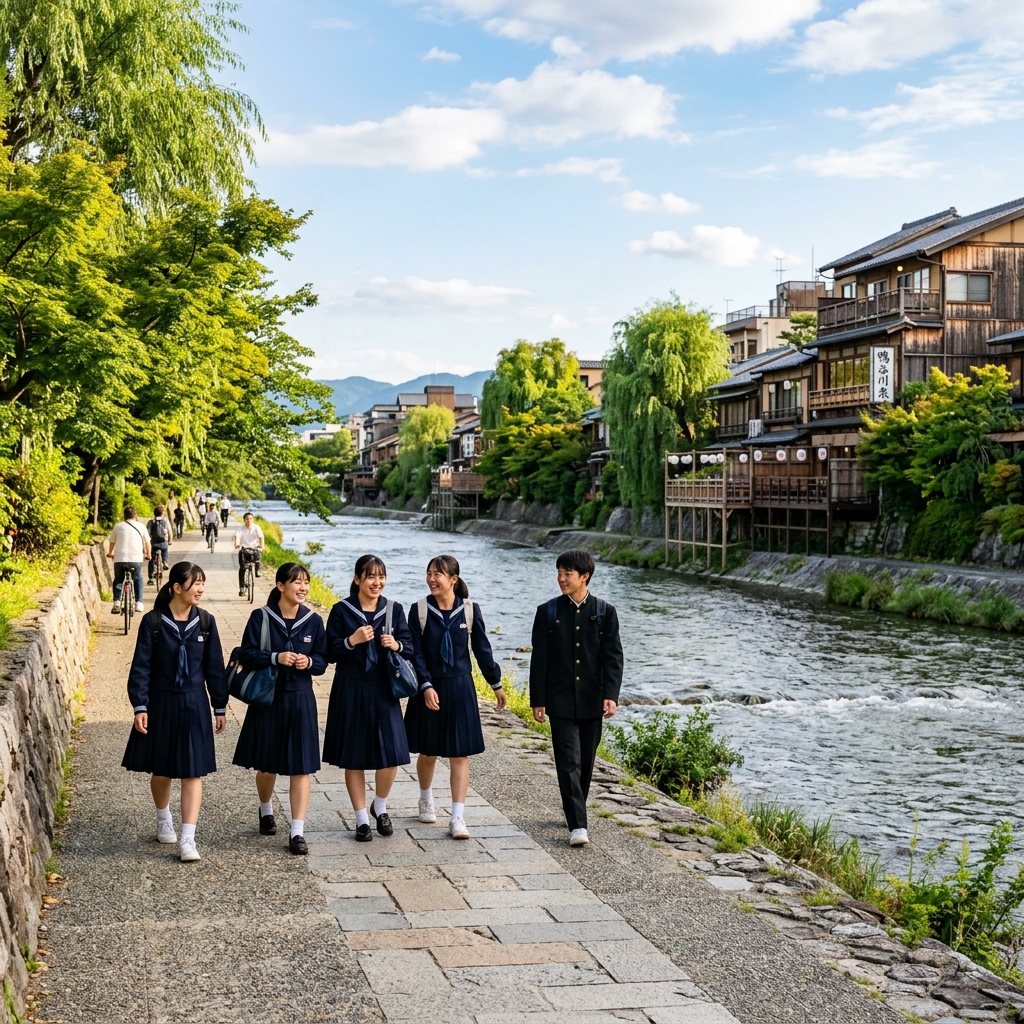
Choosing the right city to study in Japan is just as important as choosing the right school. While Tokyo is the most famous destination, cities like Kyoto, Fukuoka, Osaka, and Sendai offer unique advantages—from lower living costs and rich historical cultures to friendly startup communities. In this guide, we will compare the top five Japanese student cities to help you find the best fit for your budget and goals.
Here is an overview of how Japan's top student hubs compare in key areas:
| City | Cost of Living | Part-Time Job Market | International Community | Primary Vibe |
|---|---|---|---|---|
| Tokyo | Very High | Excellent (English & local) | Huge | Fast-paced metropolis |
| Kyoto | Moderate | Good (mainly tourism/local) | Large (academic) | Historic & scholarly |
| Osaka | Moderate | Excellent (vibrant retail) | Large | Energetic & outgoing |
| Fukuoka | Low | Moderate (growing tech) | Medium | Laid-back & coastal |
| Sendai | Low | Moderate (university city) | Small to Medium | Peaceful & green |
As the capital, Tokyo houses the largest number of prestigious universities and Japanese language schools. It is the center of business, culture, and entertainment in Japan.
Known as the city of universities, Kyoto is home to Kyoto University and dozens of other institutions. It is a city where traditional temples stand alongside student cafes.
Osaka is famous for its food culture (like takoyaki and okonomiyaki) and its warm, friendly residents. It is just a short train ride away from Kyoto and Kobe.
Located on the southern island of Kyushu, Fukuoka is consistently ranked as one of the most livable cities in Asia due to its warm climate, cheap rent, and delicious street food stalls (yatai).
Sendai, located in northern Japan (Tohoku region), is a beautiful, green city known for its university culture, led by Tohoku University. It has a mild climate and is highly welcoming to foreign students.
Tuition fees in Japan vary between public universities (around 535,800 JPY per year) and private institutions (which can range from 800,000 to 1,500,000 JPY or more). For official data regarding student lifestyles, financial assistance, and scholarship opportunities, consult the Japan Student Services Organization (JASSO) and the Ministry of Education, Culture, Sports, Science and Technology (MEXT).
Before packing your bags, you need to understand the financial reality of your target city. Use our interactive yuzu.help Budget Calculator to compare typical living expenses, food budgets, and rent across different regions. Once you arrive, navigate local wards, transport links, and universities easily using the yuzu.help Interactive Map.
Q: Which city is the cheapest for international students in Japan?
Among the major study hubs, Fukuoka and Sendai are the cheapest. Rent and daily meals in these cities can cost up to 40% less than in Tokyo.
Q: Can I work part-time in Japan as an international student?
Yes. Students can work up to 28 hours per week during school terms and up to 40 hours per week during long holidays, provided they obtain permission from immigration.
Q: Is English widely spoken in Fukuoka?
English is spoken in administrative offices and major universities, but daily life in Fukuoka requires a basic level of Japanese compared to Tokyo.
Q: How much is the average monthly student budget in Tokyo?
The average student budget in Tokyo, including rent, food, transport, and leisure, ranges from 130,000 to 160,000 JPY per month.
Q: What is the Kansai dialect (Kansai-ben)?
Kansai-ben is a regional dialect spoken in Osaka, Kyoto, and Kobe. It uses different vocabulary and intonation compared to standard Japanese (Hyojungo) taught in schools.
Q: Are tuition fees lower in public or private Japanese universities?
Public (national) universities have fixed tuition fees that are significantly lower (approx. 535,800 JPY/year) than private universities, which set their own higher rates.
Q: Is Sendai a safe city for international students?
Yes. Sendai is exceptionally safe and has a reputation for being a very peaceful, clean, and green academic environment with low crime rates.
Q: How do I apply for student health insurance in my new city?
You must visit your local Ward/City Office (Kuyakusho/Shiyakusho) within 14 days of moving in to register your address and sign up for National Health Insurance.